
On May 18, the opening ceremony for the 2026 Overseas Chinese Media Tour of Hangzhou, themed “Overseas Chinese Media Discover Wuyue: Exploring Hangzhou Through The Age of Peace”, was held in Hangzhou, Zhejiang Province, China. More than 30 representatives from overseas Chinese-language media outlets across over 20 countries and regions, including CCTVMedium, gathered in Hangzhou to begin several days of cultural reporting and exchange activities.
The event was organized by Hangzhou’s overseas Chinese affairs and federation-related departments. Its goal is to showcase Hangzhou’s profound historical and cultural heritage, the legacy of Wuyue culture, and the city’s modern development through reporting by overseas Chinese-language media. At the opening ceremony, Wang Xinyu, Deputy Director of the Hangzhou Municipal United Front Work Department and Director of the Hangzhou Overseas Chinese Affairs Office, delivered remarks on behalf of the organizers. Yin Ling, President of Canada’s 7 Days Media, spoke on behalf of overseas Chinese-language media. The ceremony was hosted by Zhu Rongxing, Party Secretary of the Hangzhou Federation of Returned Overseas Chinese.
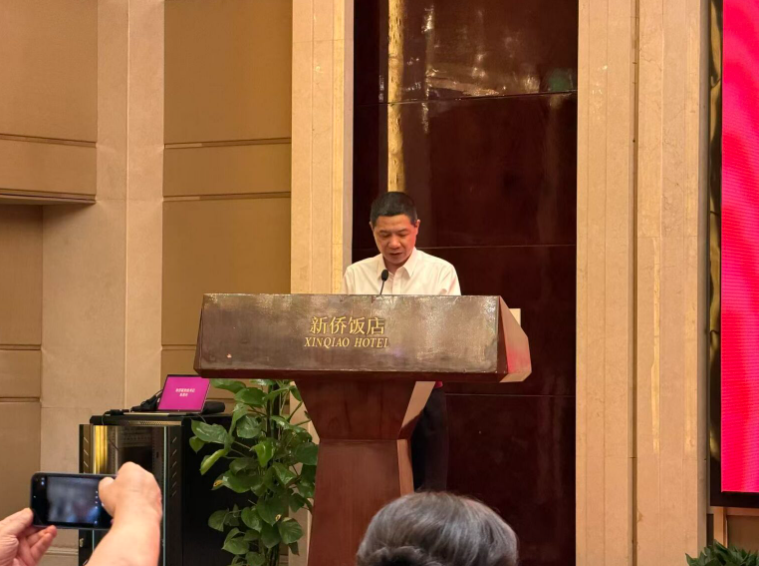
In his remarks, Zhu Rongxing welcomed the overseas Chinese media representatives who had traveled across mountains and seas to Hangzhou. He said that, through the joint efforts of the Hangzhou Overseas Chinese Affairs Office and the Hangzhou Federation of Returned Overseas Chinese, the “Overseas Chinese Media Tour of Hangzhou” has become an important window through which the overseas Chinese community can better understand Hangzhou and better understand China. The organizers hope that through the lenses and writing of overseas media, overseas Chinese audiences around the world will see how outstanding traditional Chinese culture continues to thrive and renew itself in the new era, and also how Hangzhou is building a new international communication window as a model city for integrated “culture+” development and common prosperity.
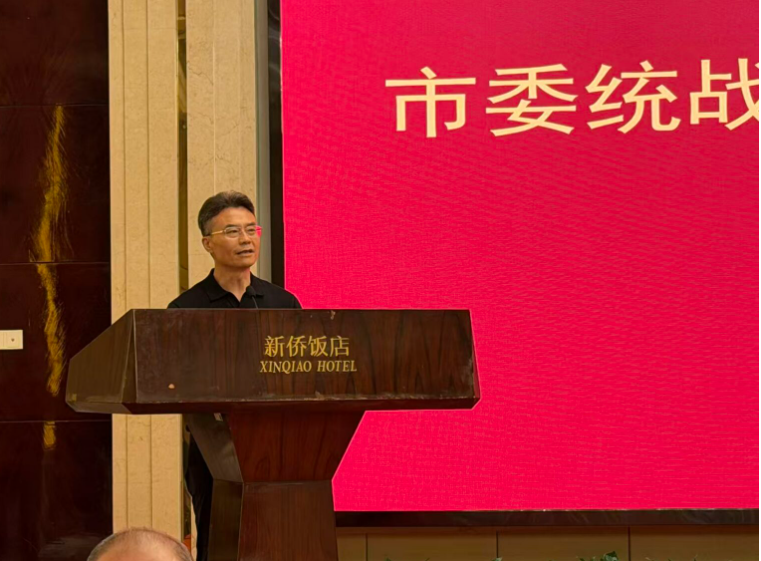
Wang Xinyu said in his speech that May is one of the most beautiful times of the year in Hangzhou. Quoting the ancient line, “Warm winds on sunny days carry the scent of ripening wheat; shaded grass and greenery outshine the flowers of spring,” he described the atmosphere of the city at this season. He said Hangzhou is not only a historic and cultural city known as a “land of scenic beauty in the southeast and a great metropolis of the Wu region,” but also a vivid example of Chinese modernization. Today, Hangzhou’s urban population has surpassed ten million, placing it among China’s megacities, while its economic output has steadily remained above the two-trillion-yuan level.
Wang added that Hangzhou’s overseas Chinese affairs system has long been committed to promoting Chinese culture and building exchange platforms for overseas Chinese-language media with an international communication perspective. Through themed field visits, cultural forums, and information-sharing activities, it has explored ways to move from “cultural export” to “value resonance.” He expressed hope that overseas Chinese-language media would use their pens and cameras to decode Hangzhou’s “cultural genes,” and transform what they see, hear, and feel in Hangzhou into reporting that is deep, warm, and powerful. In doing so, they can reach overseas audiences in a more engaging and compelling way, allowing the world to see a real, multidimensional, and complete China, as well as an open, confident, and vibrant Hangzhou.
In her remarks, Yin Ling, President of Canada’s 7 Days Media, said Hangzhou has always been one of her favorite cities. She recalled first visiting Hangzhou on business in 1995, and said that over the past 30 years she has returned many times, each visit allowing her to feel a new pulse and warmth in the city. She mentioned that after arriving one day early for this trip, she went out with friends that evening to experience the city atmosphere, and happened to encounter Wang Leehom appearing at a surprise “blind box concert” on the Xizi Corridor Bridge in the Hubin pedestrian area. Yin said she found herself immersed in a sea of young people, feeling the lively atmosphere and sensing the city’s energy, rhythm, and hope.
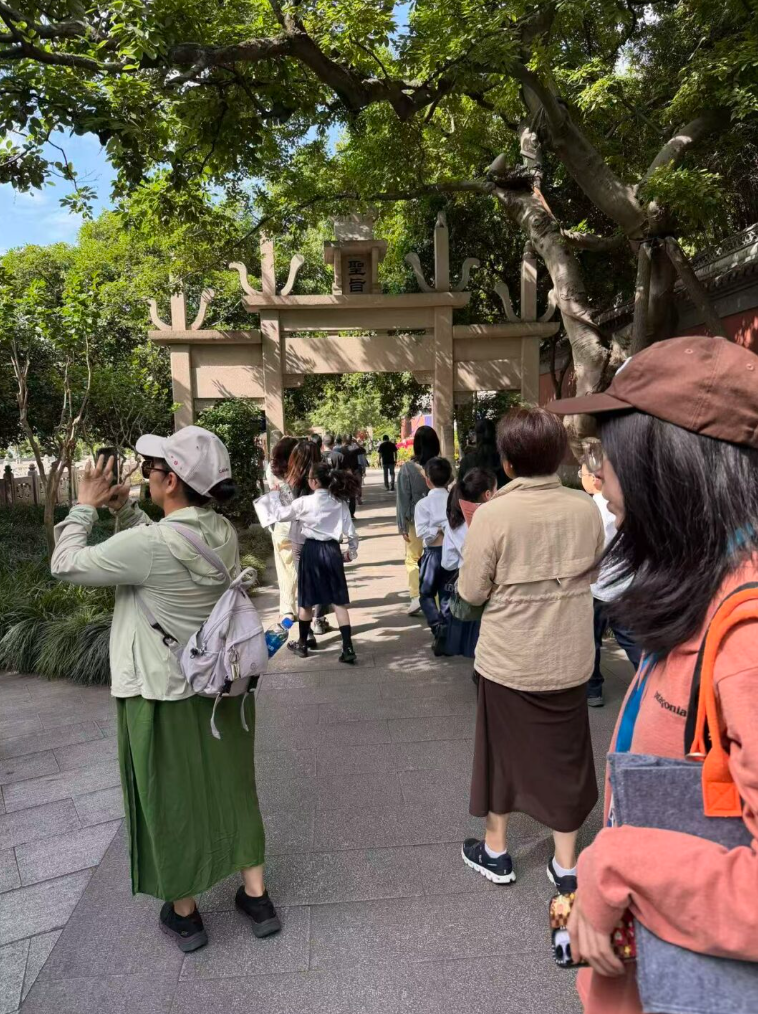
On the afternoon of May 18, representatives of the overseas Chinese-language media delegation also visited Qian Wang Shrine, located in Liulang Wenying Park on Nanshan Road in Shangcheng District, Hangzhou. Qian Wang Shrine is not only one of the filming locations of the hit drama The Age of Peace, but also an important cultural site carrying the historical memory of the Wuyue Kingdom’s principle of “protecting the territory and safeguarding the people.” During the visit, several media representatives said the shrine felt like a “living textbook” of Wuyue history, helping them more intuitively understand the deep connection between Hangzhou and Wuyue culture.
According to organizers, Qian Wang Shrine was built to commemorate the five kings of three generations of the Wuyue Kingdom. Combining the architectural norms of Jiangnan ancestral shrines with the beauty of classical gardens, it embodies the thousand-year-old spirit of Wuyue’s “protecting the territory and the people and later submitting peacefully to the Song.” Its historical roots can be traced back more than a thousand years. During his lifetime, Qian Liu, the founding ruler of the Wuyue Kingdom, received imperial approval to establish a “living shrine” in Yijin Army, today’s Lin’an District of Hangzhou. Being granted permission to build a shrine while still alive was regarded at the time as an extraordinary honor.
This year, the popularity of the Zhejiang-produced drama The Age of Peace has brought the long-quiet history of the Wuyue Kingdom in the Five Dynasties period back into public view, and has further sparked interest in and exploration of Wuyue culture. With the theme “Exploring Hangzhou Through The Age of Peace,” this overseas Chinese media tour combines film and television communication, historical culture, and urban reporting, helping overseas media observe and understand Hangzhou from multiple angles.
According to the itinerary, over the next several days, the overseas Chinese-language media representatives will also visit Lin’an District and Shangcheng District to report on sites including Deshou Palace, the Wuyue Culture Museum, and the Yijin City Archaeological Site Park of the Wuyue Kingdom, gaining a close-up view of both the historical depth and contemporary expression of Wuyue culture. The delegation will also attend a Symposium on Promoting the International Communication of Chinese Culture, where participants will exchange views on topics such as the global communication of Chinese culture, the international expression of Chinese-language media, and cultural exchange and cooperation.
Other guests attending the opening ceremony included Bai Jianjun, Party Member and Second-Level Inspector of the Hangzhou Federation of Returned Overseas Chinese; Sun Yunxin, Director of the Overseas Chinese Affairs Division of the Hangzhou Municipal United Front Work Department; Zheng Jun, Director of the Publicity and Cultural Exchange Department of the Hangzhou Federation of Returned Overseas Chinese; Zhou Mengmeng, First-Level Researcher of the Overseas Chinese Affairs Division of the Hangzhou Municipal United Front Work Department; and Hu Jian, Intermediate Economist at the Overseas Chinese Service Center of the Hangzhou Federation of Returned Overseas Chinese. (Jennifer)