

TORONTO, June 2, 2026 – The federal government said on June 1 that members of the Canadian Union of Postal Workers have voted to ratify two tentative agreements with Canada Post, covering urban postal operations as well as rural and suburban mail carriers. The federal government said this is an important development for residents and businesses that rely on stable postal service. For Chinese online sellers, small businesses, residents mailing immigration or tax documents, and senior households that rely on mailed medications or cheques, the ratified agreements may help reduce service uncertainty. However, when sending important documents and parcels, residents should still keep tracking numbers, receipts and proof of mailing.
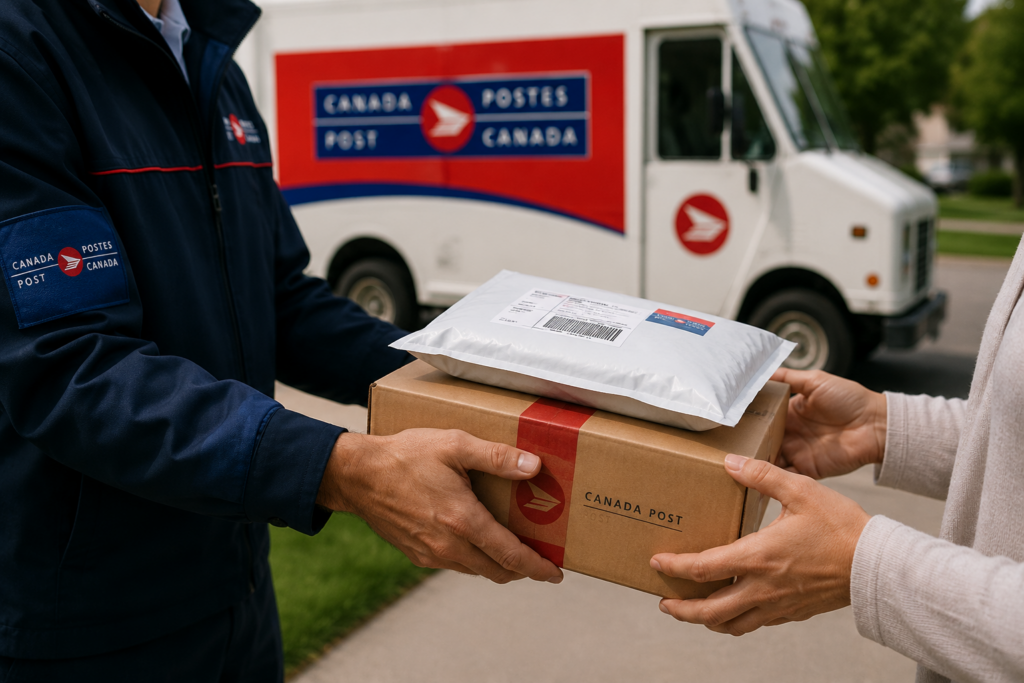
In recent months, Canada Post labour negotiations and service uncertainty have led many small businesses to adjust their shipping methods. For online sellers, handmade goods businesses, personal shoppers, document service providers and local small enterprises, postal stability directly affects order fulfilment, returns, customer complaints and cash flow. The approval of the agreements most directly means that labour-related uncertainty has decreased, but it does not mean all delivery times, costs and service arrangements will immediately return to previous levels.
Canada Post also said CUPW has informed the company that members of both bargaining units voted to accept the tentative agreements, and that both sides will soon sign new collective agreements. The new agreements will remain in effect until January 31, 2029. For businesses, this means medium-term labour risk has been reduced, but they should continue watching Canada Post updates on service adjustments, price changes, delivery standards and business account notices.
Residents mailing important documents should also avoid treating materials as ordinary mail simply because the agreements have been approved. Passports, immigration documents, CRA materials, school records, cheques, legal documents or insurance files can be costly and difficult to replace if they are lost or delayed. Newcomers and seniors with limited English may not clearly understand the difference between regular mail, registered mail, tracked parcels, courier services and private delivery companies. Before mailing, residents should confirm whether signature, tracking, insurance or delivery confirmation is needed, and keep mailing receipts and tracking numbers.
Small businesses should also review their shipping instructions and return policies. If an online store previously switched to private couriers because of postal risk, the decision to return to Canada Post should be based on price, delivery time, rural coverage, return convenience and customer expectations. For parcels going to apartments, business addresses or small towns, delivery methods may also differ, and businesses should not rely only on downtown delivery experience.
It is important to note that ratified agreements do not mean all of Canada Post’s operating challenges have been resolved. Industry reports have shown that Canada Post continues to face parcel delivery competition, declining letter volumes and financial pressure. For businesses, a stable labour agreement is only one part of the picture. Future prices, service models and operational reforms may still affect small business shipping costs.
Residents and businesses that need to mail important documents or products in the near future should separate “being able to send something” from “being able to prove it was sent and delivered.” For ordinary documents, service can be chosen based on cost and delivery time. For passports, immigration materials, tax documents, medications, cheques or high-value goods, residents should prioritize services with tracking, signature confirmation and proof that can be saved. After mailing, they should keep receipts, tracking screenshots, recipient addresses and mailing dates, making it easier to explain the situation to Canada Post, platforms, customers or relevant institutions if delays occur.(LJI by Yuanyuan)