

TORONTO, June 5, 2026 – The City of Brampton announced on June 1 that it has completed the deployment of community safety camera technology at 50 intersections across the city, including 360-degree cameras and automated licence plate recognition technology. The city said the system will not be used to issue tickets, but will provide video and information support for Peel police investigations. As local governments make greater use of surveillance technology to address public safety concerns, questions around effectiveness, data-use boundaries and privacy protection have also become a focus for communities.
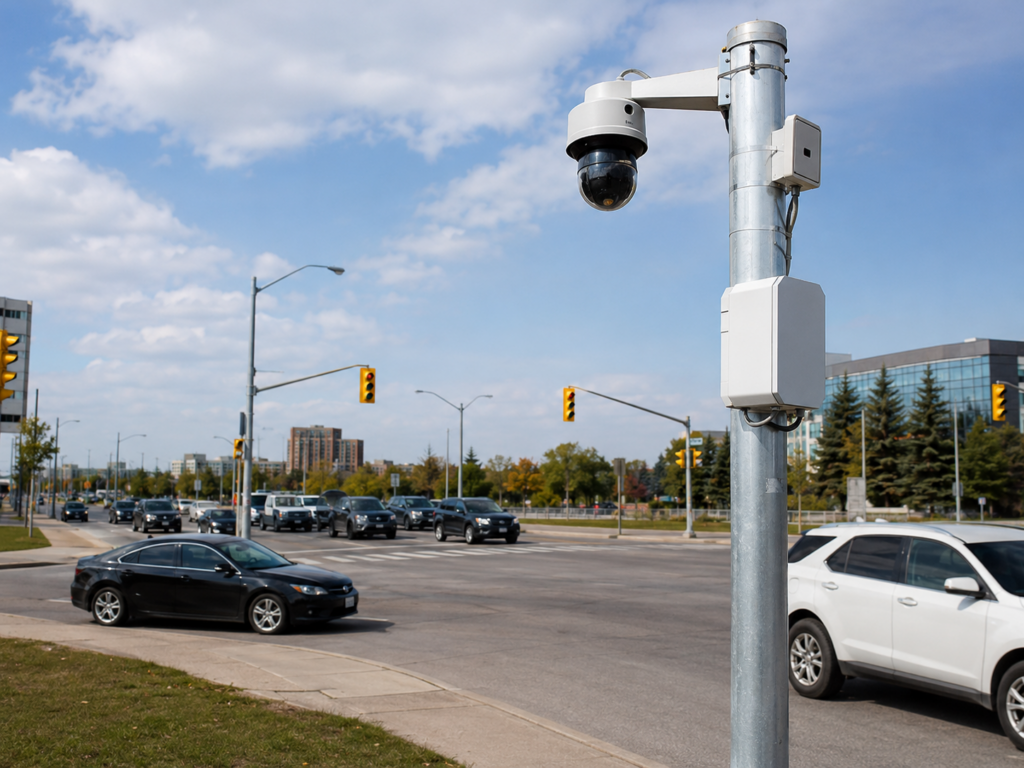
Brampton said this is the first intersection camera and licence plate recognition network of its kind deployed by a municipal government in Canada. Last spring, the city piloted the technology at 19 intersections, and it has since supported Peel police in more than 200 investigations. The city also said that during a recent telephone town hall, 84% of participants supported the use of intersection camera technology to assist police investigations and improve community safety.
For Brampton residents and small businesses, community safety is not an abstract issue. Vehicle theft, break-ins, dangerous driving and serious collision investigations can all affect how residents feel about safety in their neighbourhoods. The city’s decision to install camera and licence plate recognition systems at intersections reflects an effort by local government to use technology to supplement traditional policing resources.
However, support for improved public safety does not mean all concerns have been resolved. Automated licence plate recognition involves vehicle movement information, while 360-degree cameras may also capture large amounts of everyday travel footage. Residents may want to know not only whether the system can help solve cases, but also how long data will be stored, who can access it, whether audit records exist, whether the purpose of the system could expand, and which organization residents should contact if they have privacy concerns.
For newcomers and residents with limited English, these technology arrangements also need clear explanation. Some residents may only see “safety cameras” without understanding how they differ from red-light cameras, speed cameras or ticketing systems. The city said the system will not be used to issue tickets, but if its purpose, coverage or police use changes in the future, timely public explanation will still be needed.
Brampton’s case shows that urban safety discussions are moving beyond patrols and enforcement, and into data technology, surveillance governance and public trust. Whether the camera system receives long-term support will depend not only on how many investigations it assists, but also on whether the city and police can continue to disclose data-use rules, oversight mechanisms and actual results.(LJI by Yuanyuan)