

TORONTO, July 23, 2026 – As Mississauga’s population continues to grow and extreme rainfall draws increasing concern, natural forest cover in the Cooksville Creek watershed has fallen to about 2.2 per cent. The City of Mississauga announced on July 23 that it will use more than $450,000 in federal funding to restore local forests, wetlands and natural environments, with the goal of improving stormwater management and reducing flood risk.
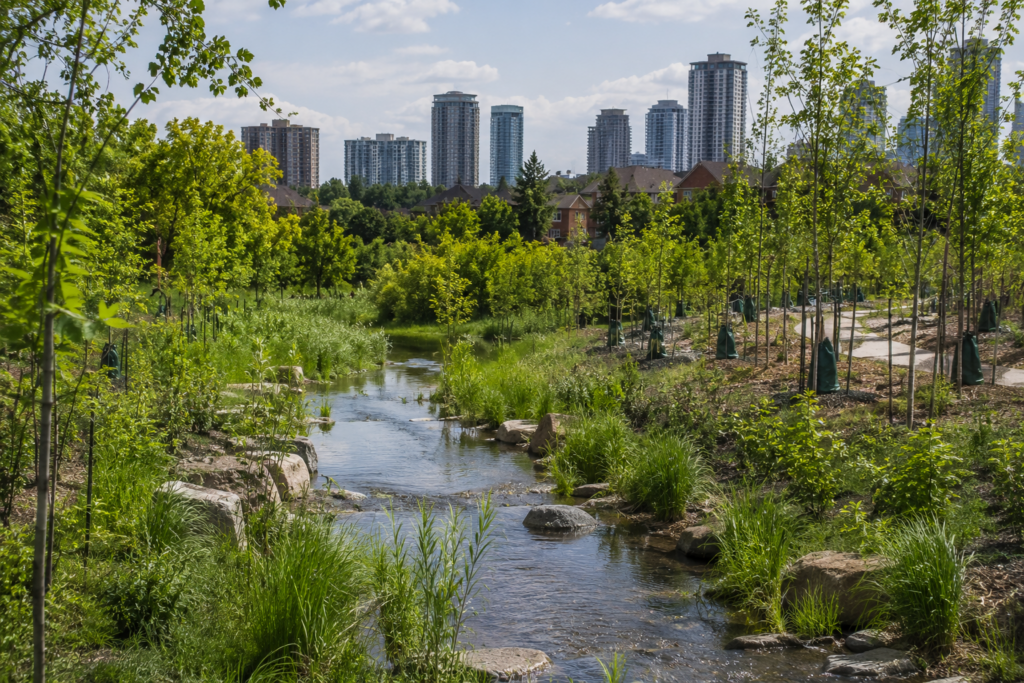
According to city data, natural forest cover in the Cooksville Creek watershed has declined over the past decade to about 79.1 hectares, representing roughly 2.2 per cent of the watershed. The city says the loss of forests and wetlands reduces the natural environment’s ability to absorb and store rainwater, while also increasing pressure on the urban drainage system during heavy rainfall.
The federal funding totals $453,406, and the project will focus on Iggy Kaneff Park in the Cooksville community. Under the plan, the city will plant 1,050 trees, 6,000 shrubs and 2,000 wetland plants, while restoring sections of forest and wetland habitat. The full project is expected to be completed by the end of December 2028.
For ordinary residents, the work is not simply about “planting more trees.”
Forests, wetlands and other natural spaces can absorb and temporarily store some rainwater during storms, reducing the amount of runoff entering drainage systems all at once. Increasing vegetation can also improve wildlife habitat and provide more green space for nearby residents.
In recent years, Mississauga has experienced several heavy rainfall events and localized flooding problems, increasing residents’ concerns about basement flooding, road ponding and the city’s drainage capacity. While a single park restoration project cannot solve flood risks across the entire city, expanding wetlands and forests is seen as a form of natural infrastructure beyond traditional drainage systems.
Cooksville is also one of Mississauga’s denser and continuously developing communities. The city has acknowledged that the area lacks sufficient parks and public green space. As a result, the ecological restoration work will be connected with the ongoing expansion and redesign of Cooksville Park and Iggy Kaneff Park.
This means the project will not only involve ecological restoration. The park environment that residents use in daily life may also change over time.
The city says the funding comes from the federal government’s Natural Infrastructure Fund. The fund supports natural or hybrid infrastructure such as wetlands, urban forests and green roofs, with the goal of using natural environments to help cities respond to climate change, flooding and related challenges.
For Cooksville residents, the 2.2 per cent forest cover figure also reflects a broader issue. As cities add more housing and population, infrastructure planning cannot focus only on roads, homes and drainage pipes. How much green space a community can preserve, and whether those natural spaces can help manage heavy rainfall, will also affect the future living environment.
The overall renewal of Iggy Kaneff Park is still moving forward. As new forest and wetland restoration work is implemented in the coming years, the area will take on multiple roles at the same time: community recreation, ecological restoration and stormwater management.(LJI by Yuanyuan)