

TORONTO, June 2, 2026 – After Chinese Foreign Minister Wang Yi visited Canada from May 28 to 30, Canada-China relations have entered a new stage of observation. Post-meeting information from both sides shows that the two countries will establish a foreign-minister-level strategic dialogue mechanism and restart political and security consultations, as well as a high-level national security and rule-of-law dialogue. For Chinese Canadian businesses, cross-border families, international students and people who frequently travel between Canada and China, the visit sends a signal that communication is being restored. However, it does not mean visa, flight, tariff, study or trade rules will change immediately.
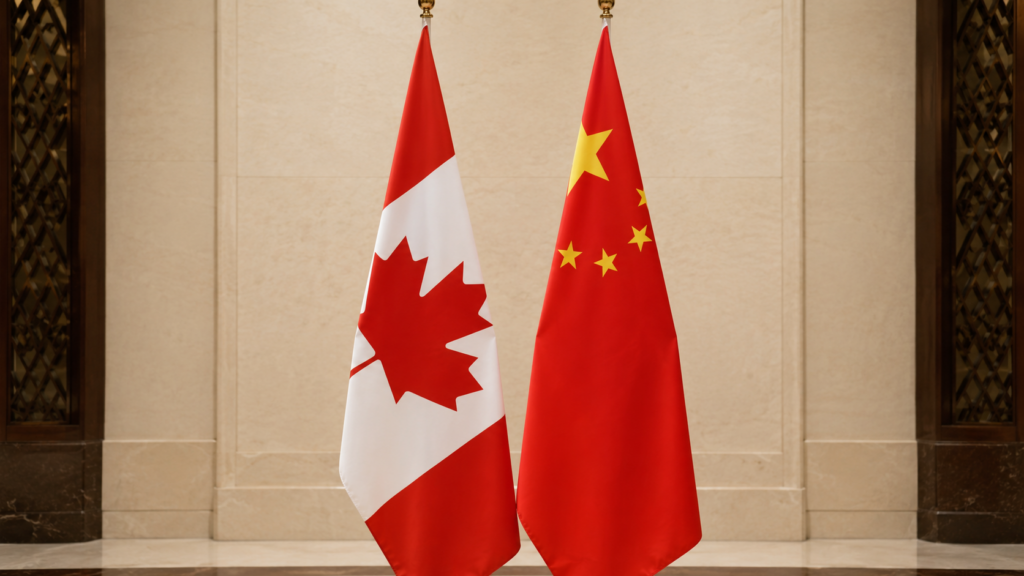
The significance of the visit first lies in the restoration of higher-level institutional communication between Canada and China. In recent years, Canada-China relations have been affected by political, security and trade issues, and many areas of cooperation lacked stable channels for dialogue. Regular foreign ministers’ meetings and the restart of political and security consultations mean the two sides have at least rebuilt formal platforms to manage differences and advance cooperation. For ordinary readers, these mechanisms may sound abstract, but they are often a prerequisite for later detailed discussions on flights, consular services, business, culture and industry exchanges.
However, restarting dialogue mechanisms does not mean policies will be implemented immediately. For Chinese Canadian businesses and small and medium-sized enterprises, the key issue is whether concrete trade and economic arrangements will follow, such as changes to import and export rules, inspection and quarantine requirements, logistics facilitation, business delegations, exhibition participation or market access. Restaurants, grocery stores, food wholesalers, wine and agricultural product traders may be watching whether improved Canada-China relations could affect supply, costs and customs efficiency. But before formal documents are released, businesses should continue handling contracts, inventory and customs declarations under current rules, and should not adjust operations based only on diplomatic news.
Cross-border families have different priorities. Many Chinese Canadian families have parents, children, property or work arrangements in both Canada and China. Their most practical concerns include whether flights will increase, whether ticket prices will fall, whether family visit visas will become more convenient, and whether consular services will become smoother. During the visit, both sides did mention people-to-people travel and flights, but these statements still require follow-up implementation by airlines, immigration departments, visa application centres and consulates. People who have already arranged summer family visits, school travel or business trips should still rely on ticket terms, visa progress and official notices.
International students and work permit holders should also avoid interpreting changes in diplomatic atmosphere as changes to personal application rules. Study permits, work permits, post-graduation work permits, immigration applications and school admissions are still processed by Immigration, Refugees and Citizenship Canada and educational institutions under current rules. For those preparing to return to school, renew permits, change status after graduation or apply for permanent residence, the more practical step is to continue keeping application records, school emails, employer documents and entry-exit records while waiting to see whether relevant departments issue new implementation details.
The visit should also not be understood as meaning that all Canada-China differences have been resolved. Canadian post-meeting information still mentioned consular matters, foreign interference, forced labour and human rights, showing that sensitive issues remain even as dialogue resumes. For Chinese Canadian communities, the more accurate assessment is that Canada-China relations now have more space for communication, but how far cooperation can go, which industries may benefit first, and which travel arrangements may change will still depend on future negotiations and policy implementation.
Next, Chinese Canadian businesses, cross-border families and international students can watch several practical channels: whether the two foreign ministries announce the next round of dialogue; whether airlines adjust Canada-China routes and ticket arrangements; whether Immigration, Refugees and Citizenship Canada and visa application centres update application rules; and whether the CIIE or related industry organizations release details for Canadian business participation. Families and businesses dealing with orders, study plans, family visits, visas or immigration applications should not make decisions based only on social media interpretations. It is safer to wait until official announcements and executable documents are clear before adjusting plans.(LJI by Yuanyuan)