

TORONTO, June 2, 2026 – Statistics Canada announced on June 2 that the 2026 Census has entered the door-to-door and telephone follow-up stage. Census staff will contact households that have not yet completed their questionnaires, remind residents to complete the census, and provide assistance to those who cannot complete it on their own. Statistics Canada reminds residents that census employees will carry official identification, and anyone unsure about a worker’s identity can call the Census Help Line to verify. For newcomer families, shared households, international students, seniors with limited English and tenants concerned about data security, the biggest risk now may not be difficulty filling out the questionnaire, but failing to distinguish between legitimate census follow-up and suspicious calls or visits.
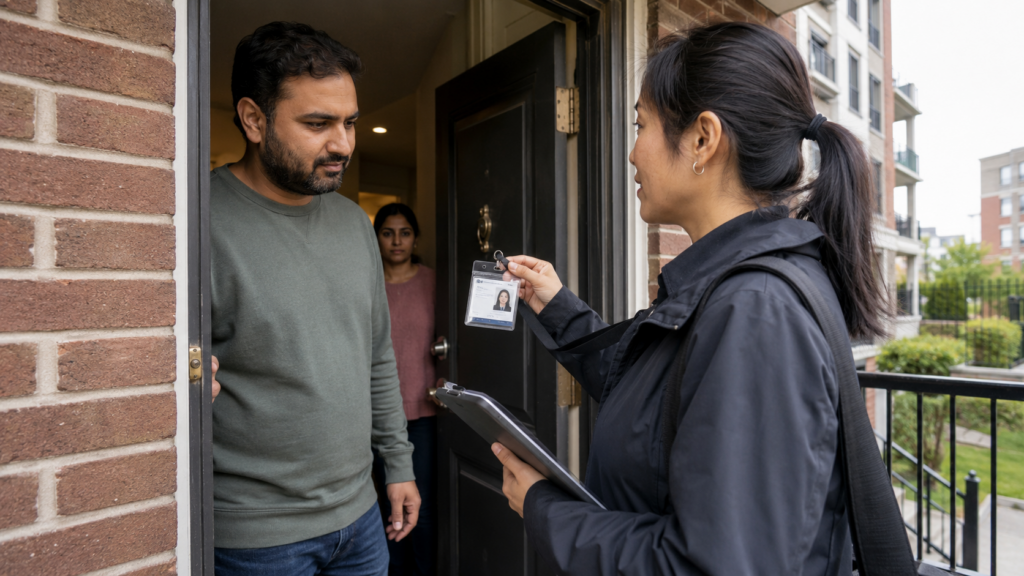
Statistics Canada said millions of households have already completed the census online, by paper questionnaire or by phone. The next step is for census employees to follow up with households that have not submitted complete questionnaires, including by phone and in-person visits. Their role is to remind households to complete the questionnaire and, when needed, help residents who have not completed it or are unable to do so by themselves.
For many newcomers and shared households, the census may look like a simple government questionnaire, but the actual process can still be confusing. In homes with multiple rooms, multiple families or temporary residents, people may not know who is responsible for completing the form or whether everyone living at the address should be included. International students and newcomers may also worry that the information could affect immigration, taxes, benefits or rental relationships, leading them to delay completing the form or even throw away census mail as if it were advertising.
Now that door-to-door follow-up has begun, residents should first confirm the person’s identity before continuing the conversation. Statistics Canada says every census employee carries identification showing the Statistics Canada logo, their name, employee number and photo. To verify a worker’s identity, residents can call the Census Help Line at 1-833-852-2026. During phone follow-up, staff should also clearly identify themselves. Official information also states that caller ID may show “GOCGDC,” which represents the Government of Canada.
Residents who receive text reminders should also check the official short code. Statistics Canada says the short code used for 2026 Census text reminders is 236732. Residents should not submit personal information through unknown links, nor should they provide passports, immigration documents, bank account information, credit card details or other financial information to anyone whose identity cannot be verified. The census collects household population and socioeconomic information, not financial account details.
Residents who do not speak English or French well also have support options. Statistics Canada says the census questionnaire must be completed in English or French, but questions and instructions are available for reference in 28 other languages. Those who do not understand English or French can call the help line, and Statistics Canada will make every effort to provide assistance from staff who speak other languages. People with hearing or speech disabilities can use the TTY number at 1-833-830-3109.
It is important to note that door-to-door follow-up does not mean residents must open the door or provide information immediately if they cannot verify someone’s identity. Residents can first check identification, record the worker’s name and employee number, and then verify through the official phone line. Shared households should also confirm among roommates who received the secure access code, who is responsible for completing the questionnaire, and whether all actual residents have been included, in order to avoid duplicate submissions or missing household members.
Census data is used to plan public resources such as employment services, schools, public transit, health care and community programs. For newcomer families and shared-household tenants, completing the questionnaire correctly also helps ensure the real population living in a community is reflected in service planning. If someone visits or calls about the census in the coming days, residents should verify identity first and complete the questionnaire through official channels. When uncertain, they can call the Census Help Line instead of providing information based only on verbal claims or unfamiliar links.(LJI by Yuanyuan)